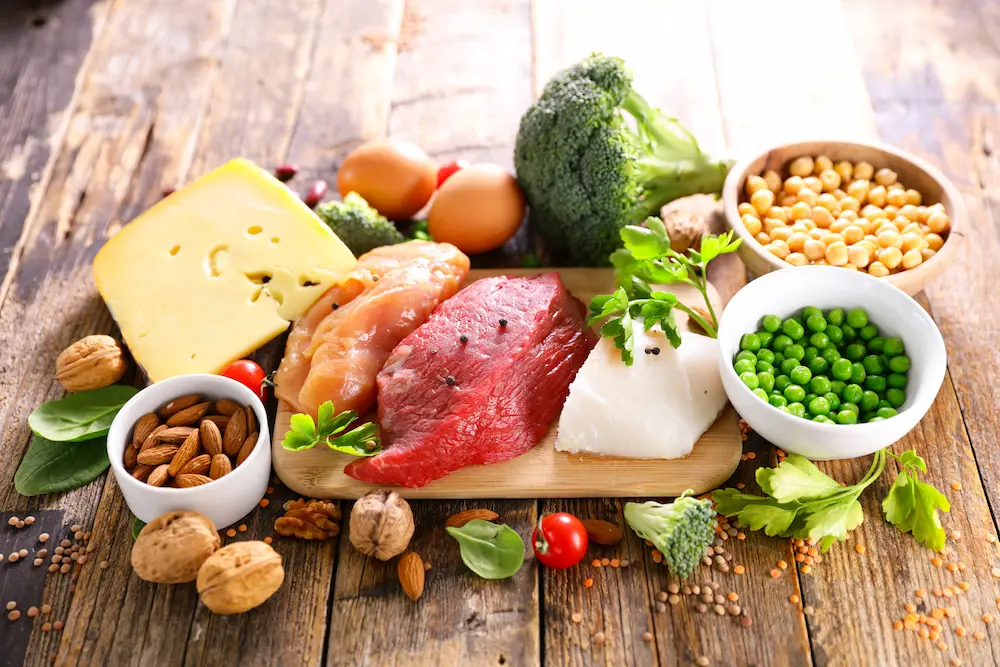
Protein is often associated with building muscle, but its benefits go far beyond your workouts. It helps repair tissues, supports your immune system, keeps you feeling full after meals, and plays a role in making important hormones and enzymes.
Whether you eat eggs, lentils, fish, dairy products, tofu, or nuts, getting enough protein can support your health in several ways.
The key is understanding what protein does, how much you need, and how to include it in your everyday meals without making your diet complicated.
What Is Protein?
Protein is one of the three main macronutrients your body needs, along with carbohydrates and fats. It is made up of smaller units called amino acids, which your body uses to build and maintain tissues.
Your body can produce some amino acids on its own, but it cannot make all of them. Essential amino acids must come from the foods you eat.
So, how much protein do you need each day? For most healthy adults, the Recommended Dietary Allowance (RDA) is 0.8 grams per kilogram of body weight per day (about 0.36 grams per pound).
However, if you exercise regularly and want to build or maintain muscle, you may benefit from a higher intake of around 1.4–2.0 grams per kilogram of body weight per day, depending on your training and fitness goals.
Benefits of Getting Enough Protein
Protein does much more than building muscle, from supporting everyday body functions to helping with fullness and weight management. Here are 10 science-backed benefits of protein and how it supports your overall health.
1. Builds and Maintains Muscle
One of the best-known benefits of protein is its role in building and maintaining muscle. Your muscles constantly break down and rebuild their proteins, and protein supplies the amino acids needed for this process.
Getting enough protein is especially important if you exercise regularly, participate in strength training, or want to maintain muscle as you age.
A review of 49 studies involving 1,863 adults found that protein supplements improved muscle strength and size during resistance training. Benefits were smaller with age, greater in trained individuals, and did not increase further above 1.6 g/kg daily protein intake.
However, eating more protein alone will not automatically build bigger muscles. Resistance training, adequate calories, and recovery are also important.
2. Supports Tissue Growth and Repair
Your body relies on protein to repair and maintain tissues throughout your life. It provides amino acids that help repair damaged cells and make new ones, including those in your skin, muscles, and organs.
Protein is also important during wound healing, when the body needs to rebuild damaged tissue.
In an animal study, protein-based treatment improved wound healing in rats by increasing collagen deposition, blood vessel formation, and tissue repair. However, further research is needed to determine whether these specific effects occur in humans.
Getting enough protein as part of a balanced diet helps supply the building blocks your body needs for growth, tissue maintenance, and repair.
3. Keeps You Full for Longer
Feel hungry soon after eating? Protein may help you stay satisfied for longer by influencing appetite-regulating hormones.
Research suggests that protein reduced ghrelin, the hunger hormone, while increasing the fullness-related hormones CCK and GLP-1 in short-term studies. However, long-term effects remain unclear.
Protein won’t guarantee weight loss, but it can help make balanced meals more filling.
4. May Give Your Metabolism a Small Boost
Did you know your body burns calories just by digesting food? Protein requires more energy to digest and process than carbohydrates or fats, so eating protein-rich meals can temporarily increase the calories your body burns. This is known as the thermic effect of food.
A 2024 review noted that higher-protein meals increased the energy your body used after eating compared with lower-protein meals. However, the long-term effects on daily energy expenditure were modest and varied across studies.
This means protein may modestly increase the calories your body burns, but it does not dramatically speed up metabolism or guarantee weight loss.
5. Helps Your Immune System Function
Your immune system relies on protein to produce antibodies and other molecules that help defend your body against harmful microorganisms. Amino acids, the building blocks of protein, also help immune cells grow, function, and coordinate their responses.
Research shows that severe protein-energy malnutrition can impair several aspects of immunity, including immune cell activity, antibody production, and the release of signaling molecules called cytokines.
Deficiencies in nutrients such as zinc, iron, and vitamins A, C, and E can also affect immune function.
Although specific amino acid supplements may benefit immune function in some malnourished or infected individuals, more protein is not necessarily better if you’re already meeting your needs. Protein supports normal immune function, but it cannot prevent infections on its own.
6. May Curb Late-Night Cravings
Choosing protein-rich foods throughout the day may help curb those after-dinner cravings. Protein can promote fullness, potentially making you less likely to keep thinking about food late at night.
In a 12-week study involving 27 overweight or obese men, participants following a higher-protein diet reported less late-night desire to eat and fewer thoughts about food than those consuming a normal-protein diet.
However, the study was small, and more research is needed to determine whether these effects apply to other populations.
Learn more: How to stop sugar cravings
7. What Protein Means for Bone Health
Protein is an important part of bone tissue. It provides the building blocks for collagen, which gives bones flexibility and helps them resist breaking.
Research suggests that higher protein intake may modestly improve bone mineral density in the lumbar spine, although benefits at other bone sites remain uncertain.
Some studies also link higher protein intake to better bone strength and a lower fracture risk, particularly when calcium intake is adequate.
For stronger, healthier bones, focus on a balanced diet that provides enough protein, calcium, and vitamin D. Foods such as dairy products, fruits, and vegetables, along with regular weight-bearing exercise, can also support bone health.
8. Helps Maintain Muscle as You Age
As you get older, maintaining muscle strength becomes increasingly important for everyday activities, from climbing stairs to carrying groceries.
A review of 22 studies found that older adults consuming more protein than the recommended amount had better muscle strength, walking speed, balance, and physical performance. However, long-term studies found no clear evidence that it prevents physical decline.
Combining adequate protein intake with regular strength-building activity can help support muscle health as you age.
9. Supports Healthy Skin, Hair, and Nails
Your skin, hair, and nails rely on proteins to maintain their structure and health. Protein supplies amino acids that your body uses to build and repair tissues, including the skin.
When your body doesn’t get enough protein, it can affect skin health and make hair more fragile. Protein deficiency may also contribute to hair loss, while eating too few calories can disrupt normal hair growth.
However, eating extra protein won’t necessarily give you clearer skin, stronger nails, or faster hair growth if you’re already meeting your body’s needs.
Getting enough protein as part of a balanced diet helps support normal tissue maintenance, but persistent skin or hair changes may have other causes.
10. May Support Weight Loss
Protein may help you feel fuller for longer, making it easier to manage your calorie intake.
A meta-analysis suggests that higher-protein, calorie-restricted diets can modestly reduce body weight and body fat while helping preserve lean muscle mass. Protein also requires more energy to digest than carbohydrates or fats, slightly increasing the calories your body burns after eating.
However, protein alone does not guarantee weight loss. Your overall calorie intake and ability to maintain healthy eating habits over time also matter.
Discover: 15 Protein-rich foods that may help with weight loss
Best Sources of Protein
You can obtain protein from both animal and plant foods. Including a variety of sources can help you get protein alongside other essential nutrients.
Animal-based sources
- Eggs
- Milk, yogurt, and other dairy products
- Fish and seafood
- Chicken and other poultry
- Lean meat
Plant-based sources
- Lentils and dals
- Chickpeas, kidney beans, and other legumes
- Soybeans, tofu, and tempeh
- Peanuts, almonds, and other nuts
- Seeds
- Whole grains, such as oats
You do not need to rely on expensive foods or protein powders to get protein. Everyday foods such as dal, chickpeas, milk, curd, eggs, roasted chana, and soy products can help contribute to your daily intake.
If you follow a vegetarian or vegan diet, eating a variety of plant protein sources throughout the day can help you obtain the essential amino acids your body needs.
Can You Eat Too Much Protein?
Eating more protein than your body needs doesn’t necessarily provide extra benefits. Very high-protein diets may displace other nutritious foods, while some protein sources can be high in saturated fat or sodium.
If you have chronic kidney disease or another condition that affects your protein needs, consult your healthcare professional before significantly increasing your intake.
For most people, a balanced diet with adequate protein is more beneficial than trying to eat as much as possible.
Closing Thoughts
Protein supports muscle maintenance, tissue repair, immune function, and many other essential processes. It may also help with fullness and weight management as part of a balanced diet.
To meet your protein needs, include a variety of protein-rich foods in your daily meals. Focus on getting an appropriate amount consistently rather than eating as much protein as possible.