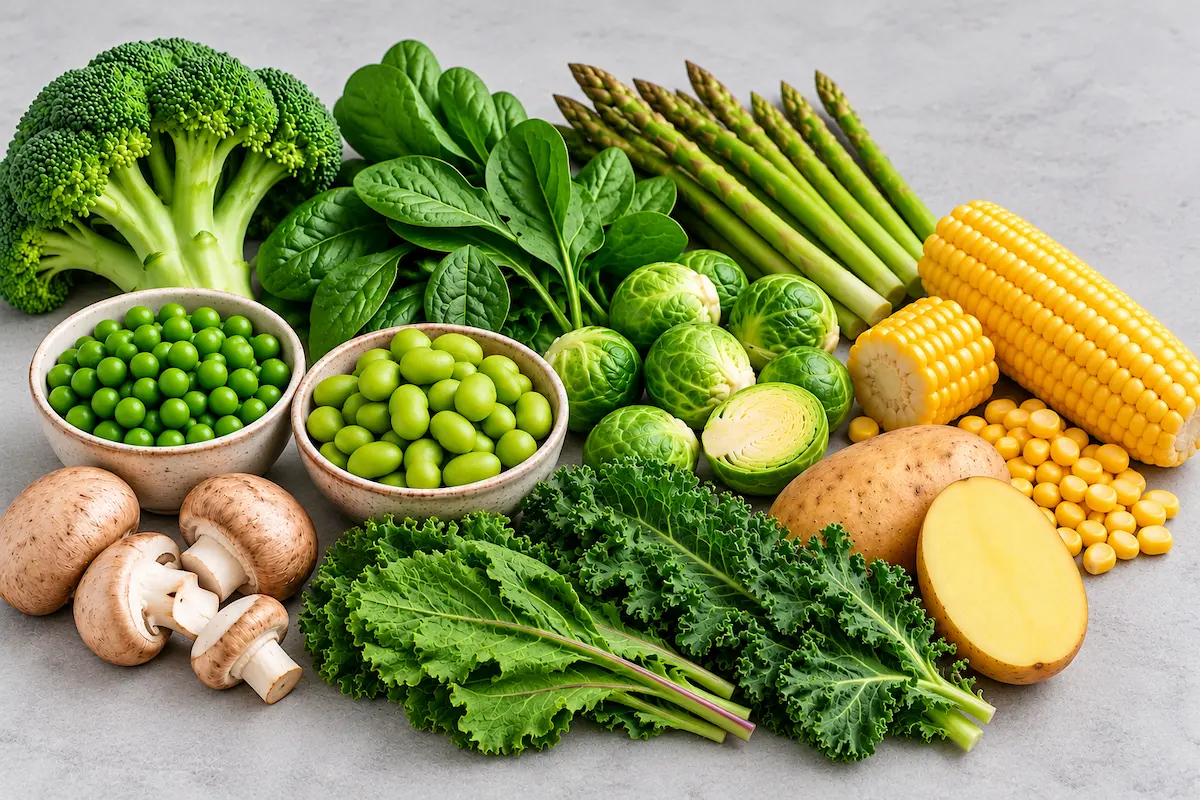
Think vegetables are only good for vitamins, minerals, and fiber? Some can also make a meaningful contribution to your daily protein intake. From green peas and edamame to spinach and Brussels sprouts, several vegetables can help you build more balanced, nourishing meals.
While most vegetables contain less protein than foods such as eggs, fish, lentils, and dairy products, choosing higher-protein varieties can help you get more from your plate.
For general health, adults typically need around 0.8 grams of protein per kilogram of body weight daily. If you train regularly, you may benefit from more—around 1.4–2.0 grams per kilogram per day is suggested for people aiming to support muscle maintenance and growth.
The trick is knowing which vegetables offer the most protein and combining them with other protein-rich foods to help meet your daily needs.
Which Vegetables Are High in Protein?
From leafy greens to starchy vegetables and legumes, these options offer varying amounts of protein, making it easier to add variety and extra nutrition to your everyday meals.
1. Green Peas
Small but surprisingly nutritious, green peas deserve more attention than they often get. Unlike many vegetables that contribute only a little protein, peas offer a meaningful amount alongside fiber, folate, and vitamin K.
A cup (160 g) of cooked green peas adds about 8.6 g of protein to your plate.
Combine them with whole grains or other legumes for a more substantial meal.
2. Edamame
If you’re looking for a plant-based food that packs a serious protein punch, edamame is an excellent choice.
These young soybeans contain all nine essential amino acids, making them a valuable protein source for people following plant-based diets.
With 18.5 g of protein per cooked cup (160 g), edamame ranks among the most protein-rich foods commonly eaten as vegetables.
Edamame also supplies fiber, folate, and iron.
3. Spinach
Spinach is a leafy green worth eating for much more than its protein content.
It supplies folate, vitamin K, and carotenoids such as lutein, which helps support normal eye health. It also contains plant-based iron.
Cooking makes spinach shrink dramatically, so a cooked cup contains far more leaves than a cup measured raw. That concentrated serving has around 5.3 g of protein.
For better iron absorption, serve it alongside a vitamin C-rich food such as tomatoes or lemon.
4. Brussels Sprouts
Roasting Brussels sprouts brings out their nutty flavor and softens their naturally firm texture.
These miniature cabbage-like vegetables belong to the cruciferous family and contain vitamins C and K, along with glucosinolates—plant compounds whose breakdown products are being studied for their antioxidant and anti-inflammatory effects.
Early research also suggests they may help protect against certain chronic diseases, although more human studies are needed to confirm these benefits.
A generous cooked cup (156 g) contributes roughly 4 g of protein, along with fiber.
5. Sweet Corn
Sweet corn brings a different nutritional combination to the table: carbohydrates for energy, fiber for digestive health, and carotenoids such as lutein and zeaxanthin, which are associated with eye health.
It also contributes around 5 g of protein per cooked cup (149 g).
Corn kernels add sweetness and texture to soups, salads, and stir-fries. For a more balanced combination of protein and fiber, try mixing them with black beans or chickpeas.
6. Asparagus
With its tender tips and distinctive flavor, asparagus can make a simple meal feel a little more special.
It is particularly useful for its folate content, which supports normal cell division, and it also supplies vitamin K.
A cooked cup (180 g) contains approximately 4.3 g of protein.
7. Broccoli
Broccoli is a practical everyday choice because it combines vitamin C, vitamin K, fiber, and several naturally occurring plant compounds. One of these is glucoraphanin, which the body can convert into sulforaphane, a compound studied for its biological effects.
Protein is another small benefit: one cup (156 g) of chopped, cooked broccoli supplies 5.14 g.
Pairing broccoli with lentils or tofu will contribute considerably more protein than broccoli alone.
8. Artichokes
Artichokes stand out for their fiber content, particularly inulin, a fermentable fiber that beneficial gut bacteria can use. A small study showed that artichoke-derived inulin may support a healthier balance of gut bacteria, including beneficial bifidobacteria and lactobacilli.
Protein is another part of their nutritional value: one medium cooked artichoke (120 g) contains about 3.5 g.
If you buy preserved artichoke hearts, check the label for sodium, particularly when they are packed in brine.
Read more: 20 Foods rich in prebiotics
9. Mushrooms
Mushrooms bring a rich, savory flavor to meals without adding much energy, making them useful in dishes where you want satisfying texture without relying on meat.
Although they are fungi rather than true vegetables, they are commonly included in vegetable-based diets.
One cooked cup (156 g) of white mushrooms contains around 3.4 g of protein.
Mushrooms also provide B vitamins such as riboflavin and niacin. Some varieties exposed to ultraviolet light contain substantial vitamin D, but this is not true of every mushroom.
Learn more: 5 Vegetarian sources of vitamin D
10. Kale
Kale is a leafy green with sturdy leaves and a slightly earthy flavor. It stands out for its vitamins A, C, and K, while its carotenoids and fiber offer additional nutritional benefits.
While kale isn’t particularly high in protein, a cup (118 g) of it cooked give you around 3.5 g.
11. Cauliflower
Cauliflower is one of the most versatile vegetables in the kitchen.
Its protein contribution is modest, at approximately 2.3 g per cooked cup (124 g).
It also supplies vitamin C and fiber, along with glucosinolates, plant compounds found in other cruciferous vegetables.
12. Okra
Also known as lady’s finger, okra is a versatile vegetable commonly used in curries and stir-fries.
One of its distinctive features is mucilage, a thick, gel-like substance made up of complex carbohydrates, proteins, and minerals. Researchers are studying its potential role in blood sugar regulation and inflammation, although more human research is needed to confirm these effects.
With 3 g of protein per cooked cup (160 g), okra makes a modest contribution to your daily intake.
For a less slippery texture, pat the pods dry and roast or sauté them.
13. Potatoes
Potatoes are often dismissed as just a source of carbohydrates, but they also contribute potassium, vitamin C, and a modest amount of protein. Leaving the skin on adds fiber, too.
One medium baked potato (173 g), with its skin, contains 4.3 g of protein.
Baking, boiling, or roasting lets you enjoy potatoes without the extra calories that deep-frying can add.
14. Mustard Greens
Mustard greens have a slightly peppery flavor that adds character to everyday meals.
A cooked cup (140 g) contains nearly 3.6 g of protein.
These leafy vegetables are also rich in vitamins A, C, and K and also contain folate and beneficial plant compounds.
Are Vegetables Enough to Meet Your Protein Needs?
Vegetables can contribute to your daily protein intake, but most conventional vegetables are not concentrated protein sources. If you rely on vegetables alone, meeting your needs may require eating large amounts of food.
For a higher-protein diet, combine vegetables with other protein-rich foods, such as:
- Legumes: lentils, chickpeas, kidney beans, and other beans
- Soy foods: tofu, tempeh, and edamame
- Dairy products: milk, yogurt, and paneer
- Animal foods: eggs, fish, chicken, and lean meat, if you eat them
- Nuts and seeds: peanuts, almonds, pumpkin seeds, and chia seeds
For example, a meal of spinach, lentils, and whole-grain roti provides protein from several sources, along with fiber and other nutrients.
You do not need to obtain all your protein from a single food. Eating a variety of protein-containing foods throughout the day can help you meet your nutritional needs.
Final Thoughts
Vegetables such as edamame, green peas, spinach, Brussels sprouts, and corn can help increase your protein intake while providing fiber, vitamins, minerals, and beneficial plant compounds.
However, not all vegetables are equally rich in protein, and most are best viewed as contributors rather than your only protein source. Combine them with legumes, soy foods, dairy products, eggs, or other protein-rich foods that fit your diet.
A varied diet makes it easier to get enough protein while enjoying the many other benefits of vegetables.