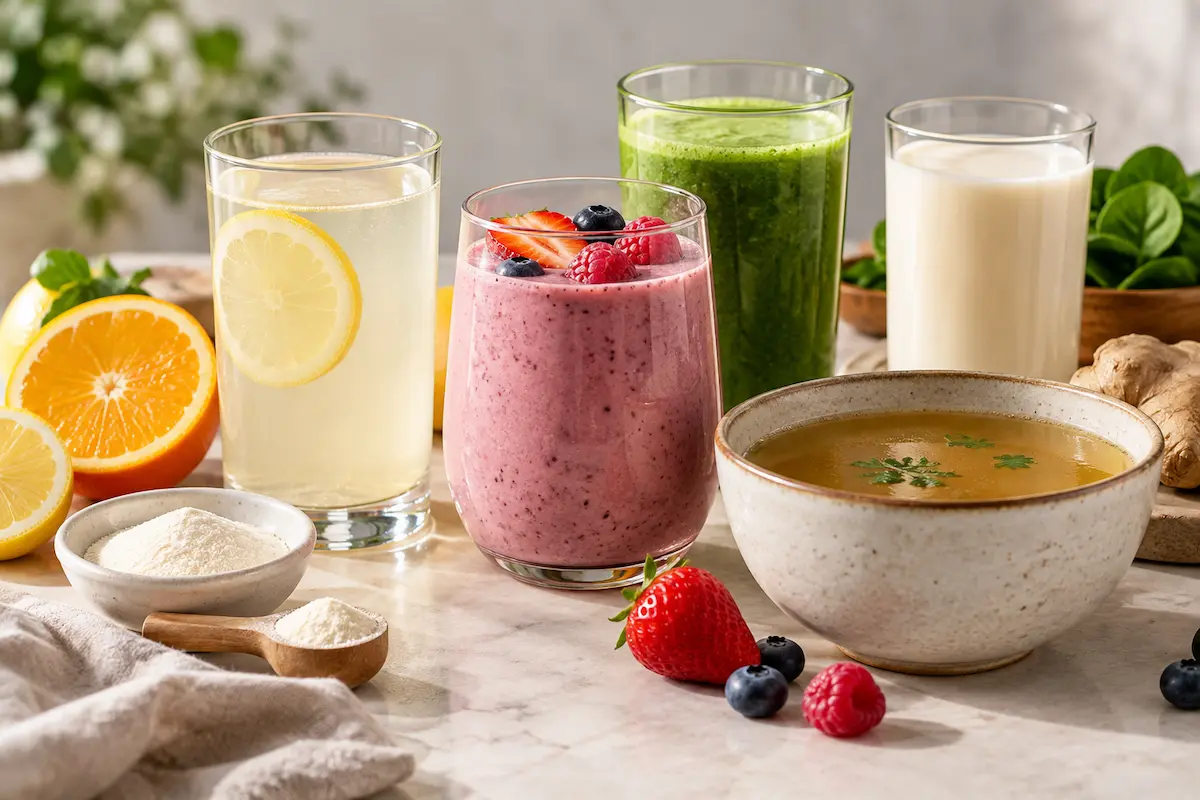
Collagen drinks are everywhere, but there is an important detail that often gets lost in the marketing: not every drink marketed for collagen actually contains collagen.
Some drinks provide collagen peptides directly, while others contain nutrients that your body uses to make collagen. There is also a big difference between a drink that contains collagen and one that simply claims to “boost” collagen.
If you are looking for drinks high in collagen, knowing what is actually in the glass can help you avoid expensive products that offer little nutritional value.
What Is Collagen?
Collagen is the most abundant protein in your body. It provides structure and strength to your skin, bones, cartilage, tendons, ligaments, and other connective tissues.
Your body naturally produces collagen by combining amino acids with the help of several nutrients, including vitamin C.
Collagen production also changes with age. Your body generally produces less collagen as you get older, while factors such as smoking, excessive UV exposure, and poor nutrition can further affect collagen breakdown and production.
Drinks High in Collagen
So, if you want to add more collagen to your diet, which drinks actually provide it? Here are some of the most direct options.
1. Collagen Peptide Drinks
Collagen peptide drinks are one of the most direct ways to consume collagen in liquid form.
These products typically contain hydrolyzed collagen peptides, usually derived from sources such as bovine or marine collagen.
Hydrolysis breaks collagen down into smaller, low-molecular-weight peptides. These peptides have greater water solubility, making them easier to mix into beverages.
You may find collagen drinks sold as:
- Ready-to-drink collagen beverages
- Collagen waters
- Collagen protein drinks
- Liquid collagen supplements
The amount of collagen can vary substantially between products, so check the nutrition label rather than relying on the word “collagen” on the front of the bottle. “collagen” on the front of the bottle.
2. Bone Broth
If you prefer something savory rather than sweet, bone broth is another way to get collagen-related proteins and amino acids from your diet.
Bone broth is made by simmering animal bones, cartilage, connective tissue, and sometimes skin for an extended period. As the collagen-rich tissues are heated, collagen can break down and release water-soluble gelatin and other collagen-derived compounds into the broth.
But there is an important catch: not all bone broth contains the same amount of collagen-related compounds. Research has found considerable variation depending on the ingredients and preparation method, meaning the amount you get from a particular serving can be difficult to predict.
That makes bone broth different from a collagen peptide supplement, where the amount of collagen is listed on the label.
Bone broth can still be a useful addition to your diet, but it is better viewed as a food containing collagen-related nutrients rather than a precisely measured collagen source.
3. Collagen-Added Drinks
You don’t always need a specialized collagen beverage to increase your collagen intake. Collagen peptides can be easily added to everyday drinks such as:
- Smoothies
- Coffee
- Tea
- Milk
- Plant-based milk
- Water
- Yogurt-based drinks
Smoothies are particularly useful because you can combine collagen peptides with vitamin-C-rich fruits such as strawberries, kiwi, oranges, or guava. Vitamin C is needed for normal collagen production, so the two can complement each other in the same drink.
Coffee, tea, and other warm beverages can also be convenient options. Collagen peptides are designed to dissolve in liquids, but follow the product’s preparation instructions. peptides are generally designed to dissolve easily in liquids, but follow the preparation instructions provided with the product.
Drinks That Support Your Body’s Collagen Production
Not every collagen-supporting drink needs to contain collagen. Your body uses amino acids and nutrients such as vitamin C, zinc, and copper to produce collagen.
While some drinks may not provide much zinc or copper on their own, you can add ingredients such as ground pumpkin seeds for zinc and dark chocolate, cashews, sunflower seeds, or sesame seeds for copper.
4. Citrus Juices
Citrus juices are an easy way to add vitamin C to your diet, and vitamin C plays an important role in collagen production. It helps the enzymes involved in making collagen function properly, allowing your body to produce and maintain normal collagen.
Orange, grapefruit, lemon, and lime are all good options. Choose 100% fruit juice when possible, rather than fruit drinks made with added sugars and little actual fruit.
You do not need a large glass to get the benefit. A modest serving of 100% citrus juice can provide a substantial amount of vitamin C.
5. Dairy-Based Protein Drinks
Milk, yogurt, and other dairy foods are useful in collagen-supporting drinks mainly because of their protein content. Protein provides amino acids that your body uses to make many different proteins, including collagen.
Dairy products themselves are not particularly rich sources of collagen, so it is more accurate to think of these drinks as protein-rich options that provide building blocks your body can use for collagen production, rather than as sources of collagen.
6. Kiwi Smoothies
Kiwi is one of the easiest fruits to add to a collagen-supporting smoothie because it provides plenty of vitamin C. Your body needs vitamin C to make collagen normally, so including vitamin-C-rich foods can help provide one of the nutrients involved in this process.
For a more balanced smoothie, blend one or two kiwis with Greek yogurt, milk, or unsweetened soy milk. You can add berries, chia seeds, flaxseeds, or a small handful of nuts for extra protein, healthy fats, and fiber.
Kiwi does not contain collagen itself, but pairing it with a protein-rich base gives you a drink that provides both vitamin C and amino acids your body can use to build proteins, including collagen.
7. Strawberry Smoothies
Strawberries bring both flavor and vitamin C to a smoothie, making them an easy choice if you want to increase your intake of this collagen-supporting nutrient.
They also contain antioxidants that may help reduce oxidative stress, which is associated with collagen degradation and skin aging.
If you use collagen peptides, a strawberry smoothie can combine a direct source of collagen peptides with vitamin C from the fruit.
8. Guava Smoothies
Guava stands out for its high vitamin C content, making it a useful ingredient for a collagen-supporting smoothie.
For a more filling drink, blend guava with yogurt, milk, or unsweetened soy milk and add other tropical fruits such as kiwi or pineapple. You can also add seeds for extra protein, healthy fats, and other nutrients.
The result is more than just a fruity drink. It is an easy way to combine vitamin C with protein and other nutrients your body needs to maintain connective tissue..
9. Soy Milk
Soy milk does not naturally contain collagen, but it can provide nutrients your body needs to make and maintain collagen. It is a good source of plant-based protein, which supplies amino acids used to build collagen and other structural proteins in the body.
Some soy milks are also fortified with nutrients such as vitamin D and calcium. While these nutrients do not directly increase collagen production, they support bone health, which is closely connected to the body’s overall structural tissues.
For the most nutritional value, choose an unsweetened soy milk with a good amount of protein and minimal added sugar. It can be enjoyed on its own or added to smoothies, oatmeal, coffee, or other drinks.
10. Green Juices
Green juices can provide vitamin C and other nutrients involved in normal collagen production, particularly when they contain ingredients such as kale, parsley, spinach, or broccoli.
Adding lemon or green bell pepper can make the drink a useful source of vitamin C, which your body needs to produce collagen normally.
Keep in mind that whole fruits and vegetables generally provide more fiber than their juice. If you enjoy green juice, consider it one way to add produce to your diet rather than a replacement for whole fruits and vegetables.
Learn more: 12 Vegetarian foods that support collagen production
Do Collagen Drinks Actually Work?
There is some evidence that oral collagen peptides may support certain aspects of skin health. A recent review reported improvements in measures such as skin hydration, elasticity, and wrinkles in some adults who consumed hydrolyzed collagen peptides.
However, the evidence is not conclusive. The studies varied in quality, and most were considered to have a high risk of bias. Results may also not apply equally to every collagen supplement or drink.
Collagen is digested and absorbed as amino acids and small peptides rather than traveling directly from your drink to your skin or joints. Your body then uses these building blocks wherever they are needed.
What Is the Best Time to Drink Collagen?
There is no well-established “best” time of day to drink collagen. You can have it in the morning, with a meal, between meals, or in the evening based on what fits your routine.
What matters more is taking it consistently if you choose to use a collagen supplement. Some people add collagen peptides to coffee, smoothies, oatmeal, or another drink simply because it makes them easier to take regularly.
You may also come across advice to take collagen before bed or immediately after exercise, but there is not enough evidence to say that one particular time is universally better for skin health. Choose a time that is convenient for you and focus on regular intake rather than perfect timing.
Closing Thoughts
If you are looking for drinks high in collagen, the most direct options are beverages containing collagen peptides or collagen-rich ingredients such as bone broth.
Other drinks, such as coffee, tea, milk, and fruit juices, do not naturally provide significant amounts of collagen, but they can be used as bases for collagen peptides or provide nutrients such as vitamin C that support normal collagen production.
When choosing a collagen drink, look beyond the word “collagen” on the label. Check the amount of collagen provided, limit added sugar, and remember that healthy skin, bones, joints, and connective tissue require more than collagen alone.